Category: Sauna

  • Are You Looking for DIY Sauna Kits in Alaska?

    Are You Looking for DIY Sauna Kits in Alaska?

    Luxury and spa-like experiences at home are now a lot more accessible. Our DIY saunas will provide endless relaxation and wellness for yourself, family and friends. Better yet, they allow you to transform your space and start sweating your way to better health.

    Our DIY saunas are crafted using the best wood, clear cedar, and a mission to make wellness a convenience for any Alaskan. Peace, luxury, and wellness await. And since most DIY sauna kits can be assembled in a weekend, you can be relaxing in style in a matter of days. Get ready to experience peace from your home sauna. 


    For the Doers: The Alaskan Way 

    DIY culture is huge in Alaska. We get things done. We’re a state of doers. So it comes as no surprise that one of the most searched terms related to saunas in our state is “DIY saunas.” And, better yet, they’re perfect for customizing your home space. You can assemble your sauna wherever you see fit to enhance your space and unplug the right way. Quality leisure, convenience, and adventure are at your fingertips.

    Assembly

    Our DIY Alaska sauna kits are delivered on a pallet so that you can take on assembly on your schedule. DIY sauna kits can be assembled with two people and minimal tools. You can take a virtual tour, or visit either of our store locations for your DIY sauna kits.

    Get A Cedar Sauna the DIY Way

    We use the best, top-of-the-line Canadian timber, giving a rustic look perfect for any Alaskan home or cabin. We’re sharing details on some of our most popular models. Plus, they all have a 5 year warranty, and are sustainable and eco-friendly. 

    The Cedar Saunas:

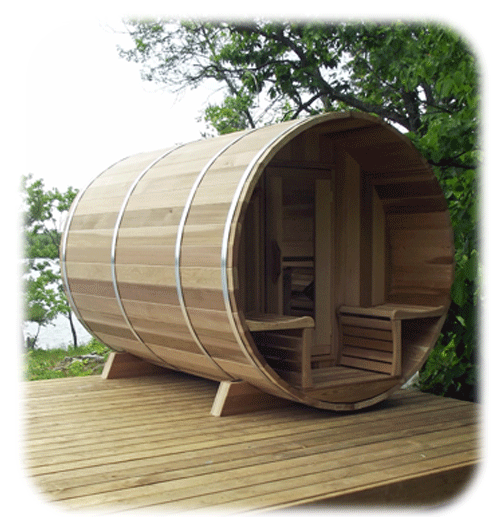
    The barrel sauna is unique and long-lasting. From the solid door frame to marine grade aluminum bands, comfort starts with quality.

    The Cedar POD sauna allows you extra seating and can be heated using an electric or wood burning stove. 

    Outdoor Mini POD saunas are perfect for your urban backyard, ski chalet or lakeside cottage. With lots of great upgrades they’re perfect for relaxation.


    Building Your Retreat with a DIY Sauna Kit Starts Now

    Your DIY sauna is about more than finding relaxation after a hard day of hiking, fishing, skiing, or snowmachining. It’s an investment in your health and wellbeing.

    Building your retreat—and your wellness—with a DIY sauna starts now. With DIY Alaska sauna kits, once you assemble, you can recharge and replenish anytime you wish from the comfort of your background. 

    We’re available to assist you with any questions you may have. Stop by either of our locations today. 

    Have fun creating something you can enjoy time and time again. Relaxation and flexibility are right at your fingertips. Get a Sauna Now. 

  • What is low EMR and why does it matter for your Infrared Sauna?

    What is low EMR and why does it matter for your Infrared Sauna?

    Infrared saunas are increasing in popularity and for good reason. The health benefits of infrared saunas are incredible. But, how do you know if you’re getting the best one? The Waterworks carries Finnleo brand saunas, which have a claim to fame of low EMR. How does that benefit you, impact your health, and help the environment?

    What is low EMR?

    Electromagnetic radiation (EMR), also known as electric and magnetic fields or electromagnetic fields (EMF), is present wherever electric and magnetic fields meet, including in everyday appliances in your home. Consider your microwave, for example. Anytime it’s plugged in, it is creating electric fields. 

    Like your microwave, this occurs with any appliance that you plug in— such as a sauna. Because the last thing you want is to be worried about radiation when trying to relax, you’ll want to ensure your sauna is subject to rigorous testing against the highest standards of safety. The result? Relaxing with peace of mind while providing a luxurious in-home getaway.

    What are Electrical Fields?

    The EMR levels of your sauna are dependent on the electrical fields (EF) created from the power supply. The greater the power supply, the stronger the electric field is. The strength drops relative to your distance from the source.

    EF can be split into static and alternating fields. Alternating currents, like the ones coming from your appliances, fluctuate over time. Static fields never change over time, but do have a surface charge that can produce tangible effects. Think of scooting socked feet across the carpet and shocking someone. 

    Being that low EMR is the goal, you want a lower EF, right? Not necessarily, because Extremely Low Frequency (ELF) fields can have adverse effects on health. ELFs are a type of EMR that measure below 30Hz. These low frequencies can be attributed to many health issues.

    ELF has been associated with a dramatic rise in childhood leukemia and the overstimulation and alteration of muscles and nerve cells in the central nervous system, according to WHO. To ensure your sauna has the lowest safe levels of EMR without getting into the ELF range, go with a reputable, tried-and-true brand.

    Why does low EMR matter for your sauna?

    Riding the line between low EMR and ELF is important, and the benefits of an infrared sauna in that target range are surprising. Even though infrared light is a higher frequency of EMR than the microwave from our example, it is safer and has many health benefits.

    Infrared can be broken down further into its own spectrum between far-, mid-, and near-infrared; with far being the lowest and near being the highest frequency. Near-infrared light is very similar to a red light treatment at a spa, but far-infrared offers far more benefits.

    Health benefits of infrared saunas include:

    • Reducing inflammation
    • Stimulating injuries to expedite the healing process
    • Weight loss
    • Skin benefits such as reducing cellulite and signs of aging
    • Improving blood pressure and cardiovascular health

    The features that make the saunas so beneficial also play a role in keeping EMR low, and Finnleo pure infrared saunas have the lowest possible EMR to provide healing and even protect your health.

    Health benefits of low EMR

    So how do low EMR levels protect you? In addition to adverse exposure to ELF mentioned earlier, exposure to high frequencies can have consequences just as detrimental to your health. Low EMR can protect you from experiencing high-frequency illness symptoms while also:

    • Reducing headaches or migraines
    • Improving sleep quality
    • Boosting immune system
    • Protecting your ears from tinnitus
    • Stabilizing temperament and preventing mood swings

    Additionally, low EMR therapy helps you minimize your risk of chronic illnesses like:

    • Concentration and behavioral disorders such as ADHD
    • High or low blood pressure and cardiovascular issues
    • Degenerative brain diseases
    • Cancers including leukemia and brain tumors
    • Heart disease

    And low EMR is good for more than humans. It protects the environment too.

    Environmental impacts of EMR

    Choosing a sauna with the lowest, safest EMR not only protects your health but environmental health too. The rise of EMR emitting technology has created an electromagnetic smog that, when not regulated, is every bit as harmful as smog caused by fossil fuels and other pollutants. This is why it’s so important to ensure you are purchasing a sauna with the lowest EMR possible. Unregulated EMR can:

    • Impact the health of bees by dramatically reducing the amount of queen bees hatched and reducing bee population.
    • Additionally, EMR from rocket launches is so strong that it alters the thermal state of the environment.

    Your Finnleo sauna will help protect the environment by producing 20% fewer emissions compared to other brands. This is enough to meet Sweden’s standards which are the strictest in the world. Additionally, Finnleo saunas are made from natural materials like glass and wood, and even use a biodegradable finish so they won’t sit in landfills for years. You will truly be able to relax in your sauna, knowing that your health and your home are both safe.

    Finnleo provides the best of both worlds by providing the safest EMR levels and luxurious finishes for a spa experience. If you are interested in purchasing a sauna or want to talk to an expert, call 907-563-3848 today. We’ll even handle the delivery and installation because saunas should truly be stress-free. Shop now to get started!

  • 7 Benefits of Having a Home Sauna

    7 Benefits of Having a Home Sauna

    This article originally appeared on Finnleo.com.

    Are you considering installing your own sauna at home? We’ve listed 7 reasons to stop considering and start installing!

    There are probably as many reasons to get your own home sauna as there are sauna lovers out there. But if you’re still hesitating, you might want to consider the fact that sauna…

    … strengthens social bonds

    Constantly online and with an ever-diminishing attention span, we’re often not as focused on our near and dear ones as we wish we were. The sauna offers a sanctuary where we get to unwind and give each other our undivided attention. Are you having problems getting your teenager to look up from iPads and smartphones? Spending some time together in the sauna offers a great tech pause, allowing for thoughtful communication and silent contemplation.

    … reduces stress

    The heat in the sauna helps us to relax and regulates the level of cortisol in our blood. Cortisol is the hormone that is released when we’re stressed, and too high levels of cortisol can lead to a number of health issues such as problems with the immune system and with sleeping. Sauna bathing reduces the levels of cortisol in our blood, and instead, it stimulates the production of serotonin. Serotonin is our “happy hormone” that makes us feel good.

    … strengthens the immune system

    Sauna has a proven positive effect on our immune system, and regular sauna bathing dramatically reduces the risk of catching common colds and the flu. The heat boosts blood circulation and stimulates the production of white blood cells, which in turn helps protect our bodies against viral and bacterial attacks.

    … helps you lose weight

    Did you know that a hot sauna can burn just as many calories as a run? The raised temperature stimulates sweating and a calorie burn in the same way as when the body temperature is raised through physical activity. Dr. Steve Faulkner at the Longborough University is behind this discovery that he made when he let participants in a study first take an hour-long hot sauna followed by biking for an hour. What he found was that when people combine sauna with exercise, the combined effect is lower blood sugar levels and more calories burned.

    … helps you sleep better

    The heat, the silence and the solitude will help you relax, and research has shown that a sauna session can have dramatic effects on sleeping patterns. By raising your body temperature in the sauna just before it is time to go to bed, your heated body will automatically work to readjust its temperature afterward. It is this cooling-down process and your body’s return to normal temperatures after the sauna that will lull you off to sleep, leaving you calm and relaxed enough to sleep soundly through the night. You can read more about sauna and sleep here.

    … rejuvenates the skin

    Taking regular saunas, especially steamy ones, can have a truly transformative effect on the skin’s appearance. The elevated heat and the increased sweating and circulation stimulates the production of collagen and deeply cleanses and rejuvenates your skin. Don’t forget to rehydrate, both from the inside, drinking plenty of water, and externally with a nice moisturizing lotion. We have written more about sauna and skin here.

    … protects the heart from diseases

    Research has shown that regular sauna bathing may dramatically lower the risk of suffering from heart diseases. A 20-year Finnish sauna medical study (Laukkanen, Tanjaniina, University of Eastern Finland, “Sauna Bathing and Mortality,” JAMA, Apr. 2015) revealed sauna bathing can have dramatic positive impact on heart health. The study also showed the more frequently you sauna bathe, the stronger the positive effects on health and your heart. You can read more about sauna, your heart and health here.

    Ready to add a sauna to your home? Contact us today!

  • How to Compare Traditional vs Far-Infrared Sauna

    If you are interested in heat bathing, you have probably read many articles regarding the health benefits of traditional sauna, far-infrared sauna, and steam baths. Today, we are going to look at the biggest debate, which is between traditional sauna and far-infrared sauna.

    How to choose the best sauna for you

    To begin: “The sauna you will use the most is the best sauna.” Thus, this article is not to address the question of “What’s better—traditional sauna or far-infrared sauna?” Rather, we’ll explore the differences between the sauna types and why you might prefer one over the other.

    Example of a traditional sauna:

    If you prefer lower temperatures but with body-penetrating heat, far-infrared sauna may be your best sauna choice.

    Example of an infrared sauna:

    Finnleo Far-Infrared B840 Sauna

    If you prefer lower temperatures but with body-penetrating heat, far-infrared sauna may be your best sauna choice.

    Comparing Similarities of Traditional Saunas vs Infrared Saunas

    First, let us look at the similarities of the rooms and the shared benefits. The goal of sauna bathing varies by person, but let’s assume your general goal is to enjoy the benefits of heat bathing: relaxation and stress reduction, sweating (with the associated detoxification) and relieving aches and pains. Both sauna types provide these benefits, although the conditions under which the benefits are achieved are quite different.

    The benefits of heat bathing have much to do with the sauna creating a self-induced fever. As Hippocrates, the Father of Medicine, observed, “Give me fever and I can cure every disease.” While this statement is hyperbole, it does point to the healing power of an increased body temperature.

    Both sauna types will be relatively dry. The far-infrared rooms tends to be close to normal house humidity levels unless it has been on for extended periods of time. The traditional sauna will be drier (10% or lower) until water is sprinkled over the rocks. The traditional sauna is the only bath in the world where the user controls both temperature and humidity, with humidity controlled to user liking by how much water is thrown on the rocks. In far-infrared saunas you control the temperature, but the humidity is whatever it is

    While perspiring in either sauna, you will experience deep relaxation, sore muscles are loosened, and aching joints will likely feel relief. The process of perspiration burns some calories, though the amount of calories burned is debatable and is dependent upon the individual. Most of the weight lost in a sauna is water loss and is re-gained upon rehydrating. However, without a doubt sauna can be an important part of a healthy weight loss program.

    Comparing Differences of Traditional Saunas vs Infrared Saunas

    To look at the differences between traditional and IR saunas, I will separate these into verifiable, theoretical, and fabricated differences.

    It’s important to address the differences in this way because there are many opinions that exist about saunas that have to do more with personal experience, cultural tradition, and market competition than scientific fact. We’ll address the verifiable differences, the facts, below.

    Verifiable differences between traditional saunas vs infrared saunas:

    • Temperature
    • Heating method
    • Heat-up time
    • Amount of energy used for typical sized room
    • Social experience

    The verifiable differences are temperature, method of heat, heat-up time, amount of energy used for typical sized room, and the social experience.

    Sauna Temperature

    The temperature for a traditional sauna typically ranges between 150 and 185º F. In the United States, Underwriters Laboratory (UL) dictates that the maximum temperature at ceiling level is 194º F (90º C). Thus, the hottest point in the sauna—which is at the ceiling directly above the sauna heater—is typically between 185 and 190º F. Claims that a traditional sauna exceeds 200º F is simply not true and not applicable for electric saunas sold in the US.

    The temperature for a far-infrared sauna is usually set between 120 and 140º F; however, unlike the traditional sauna, the goal in and IR room is not to achieve a high temperature. Instead, in a far-infrared room, the bather wants the emitters to remain active because infrared energy is only being emitted (therefore providing the benefit of the deep penetrating infrared heat) when the emitters are on. Because of this, the temperature difference is almost irrelevant, since profuse sweating results in both sauna types, but the method of heating the body is different. In an IR sauna the bather will feel hot and will sweat profusely, but at much lower temperatures. Thus, if the goal is to spend longer periods of time in the sauna, the IR sauna is a good choice.

    Heating method

    In a traditional sauna, perspiration is achieved when the bather enters a heated room. When a traditional sauna has been properly heated, the sauna walls are warm, the air temperature has achieved set temperature and the rocks are super heated. As an interesting side note, the heated walls and the rocks are emitting far-infrared heat, combined with the heated air, to create an “enveloping heat”. The process for heating the room most often involves an electric heater that heats a compartment of stones, which then radiate the heat throughout the room. When the high temperature is achieved, the elements cycle on and off to maintain the high temperature. Most traditional sauna users enjoy pouring water over the rocks to create steam to raise sauna humidity levels. The benefits of pouring water over the rocks include: making the room more comfortable, moistening the nasal passages, and allowing the use of aromatherapy by mixing essential oils with the water.

    There is an on-going worldwide trend with traditional sauna bathing for “lower temperatures and higher humidity”—the so-called “soft sauna”.

    In a far-infrared sauna, the heat waves penetrate the body to effectively heat the body and raise the body core temperature. To achieve this increased temperature, Far-infrared emitters create infrared energy which is close to the same wavelength as that which the body naturally emits—often referred to as the “Vital Range” of 7 to 14 microns), so the energy is well received by the body. The infrared energy deeply penetrates the skin and warms the muscles and joints. When the energy enters the body, it causes the body temperature to increase and ultimately results in perspiration. In an infrared sauna it’s important for the emitters/heaters to remain on almost constantly. Since there is no mass of rocks to retain heat, the sauna will cool if the emitters shut off. Thus, even though most of the energy is turned into efficient infrared energy, IR saunas are designed for almost continuous operation of the infrared emitters. As mentioned above, the sauna bather in an infrared room wants to position himself in front of operating emitters to get maximum benefit from the heat.

    Heat-up time

    The heating time for the two rooms can be very different, depending on how the rooms are used. For a traditional sauna, a bather should allow 30-40 minutes for the room to achieve a desired temperature and to properly pre-heat the rocks. This heating time is dependent upon the ambient temperature from which the room begins heating, the amount of insulation in the walls, and the ventilation provided in the room. A well constructed sauna will typically achieve a temperature of 150-160º F in about 30-40 minutes. For hotter temperatures, the room may need to heat for a longer period. Once the room achieves set temperature, the heater will cycle on and off, typically operating about 50% of the time. The insulated walls and the heated rocks will keep the room hot and at stable temperatures. Many sauna users enjoy staying in the sauna after the elements have timed out (a 60 minute timer is standard on all residential saunas).

    For a Far-Infrared room, a person may begin bathing when the room is turned on, since the infrared energy is being emitted by the heaters; however, many bathers would prefer to wait until the room is 110º F or hotter. Over the weekend, I worked a trade show, and I turned our infrared sauna on with an ambient room temperature of 70º F degrees, and within 15 minutes, the room had exceeded 100º F . There are two schools of thought with how to use the room. To some, 15 minutes was “wasted” while the infrared energy heated the wood panels rather than heating a body, while others find a pre-heated room to be more comfortable and believe an elevated starting temperature is necessary to begin perspiring.

    The length of recommended use for each room is approximately the same (10-15 minutes per session); however, due to the lower air temperatures and the ability to feel the effects of infrared heat faster than a traditional sauna, it is not uncommon for a person to spend a total of 20-30 minutes in an infrared sauna. There are many medical practitioners, especially in Canada, who prescribe 30 minute infrared sauna sessions for their patients. Regardless of which heat system is used, the bather must closely monitor how he feels while using the room, and he must be sure to drink plenty of water during the break between sessions.

    From an economic and ecological standpoint, energy use has become a more important factor in consumers’ decision making. Neither room will cause a substantial increase in a household electric bill, but I will compare one of the most common traditional sauna sizes to one of the most common infrared sauna sizes. Traditional saunas tend to be larger (hence use more electricity) than infrared saunas, although traditional saunas are certainly available in one and two person sizes as well.

    For a two-person traditional sauna, 5×6 or 5×7 size is most popular. The top bench can comfortably seat two or three people and is also long enough to lie down during the sauna session. This room uses a 4.5 kW heater, 240 volt, 1 phase power; it draws 18.8 amps and requires a dedicated line and breaker. The average cost per kWH of electricity in the U.S. is approximately $0.11, so a 4.5 kW heater will cost approximately $.50 to run for one hour, if the heater runs continuously for one hour. Typically a sauna heater will run for 75% of the first hour and 50% of subsequent hours on since the elements cycle once the set temperature is achieved. Thus, a 4.5 kW heater will cost about $.37 the first hour and $.25 each subsequent hour of continuous use.

    A two person far-infrared room is usually physically smaller than a traditional sauna, often about 4’ x 4’ or smaller. The IR heating system is typically 1.5-1.7 kW using a 120 volt 15 amp plug-in service. Since the room can be used sooner than a sauna room, we will assume the room is used for ½ to ¾ of an hour including heat up time. At $0.11 / kWH, a two person infrared room will cost $0.18 to run for 1 hour, but because the IR sauna most likely not on for a full hour, realistically the room will cost about $.10 per use.

    Social experience

    Finally, there is a seldom discussed difference in the social experience between the two rooms. While our culture has lost some of the social benefit of the traditional sauna experience, it can be very socially rewarding. From family time in the sauna, to heart-felt conversations with significant others, to sauna parties—the traditional sauna experience can lead to intimate socializing. Traditional saunas are typically large enough to allow multiple people to enjoy the sauna for social time. Though a sauna session may only be 10-15 minutes at a time, when time allows the sauna can be used in multiple “innings”; the experience of heating the sauna, preparing to use the sauna, talking while in the sauna, and relaxing after the sauna can be very therapeutic and rewarding.

    While it is possible to converse in an infrared room, due to the smaller room sizes and room design the typical experience of the infrared room is often more of a private escape. Most higher end infrared rooms include colored light therapy, sound systems and full-glass fronts. The size of most rooms allow for 2 people to comfortably use the room, while some designs may allow for a 3rd or 4th person to use the room. Custom infrared rooms are also available, with room sizes available up to 7′ x 8′ x 7′ high.


    As you prepare to purchase your sauna, please keep an open mind to both experiences. If you cannot decide which is best for you, consider an InfraSauna which combines both traditional and far-infrared in one room—where the user decides what type of sauna he/she is in the mood for at “sauna time.”

    More tips on choosing the best sauna

    When you research your purchase, carefully read relevant information; consider for yourself how you plan to use your sauna and what health benefits seems relevant. Carefully sort out claims by some manufacturers of superior health or safety benefits. The truth is, both types of saunas have the benefits of heat bathing. Your goal is to find a sauna that fits your wellness plan, your space available and your budget. As I stated in the beginning, “The sauna you will use the most is the best sauna.”


    If you require further assistance in determining which room best meets your needs, contact your local sauna specialty dealer who carries BOTH traditional sauna and far-infrared sauna. Their interest is in meeting your needs rather than promoting and selling only one product. If you are using heat bathing as part of a recommended program by a doctor, ask your physician for her advice given your medical history.


  • Sauna Routine to Improve Sleep and More Health Benefits

    Sauna Routine to Improve Sleep and More Health Benefits

    This article originally appeared on Finnleo.com.

    Whether you have visited a sauna before or you are completely new to the benefits of taking a sauna break you may not have considered the benefits saunas provide your sleep routine. Going to the sauna can help you sleep better. This is ideal for individuals who want to go to sleep easily every night without sleep aids or prescription drugs. In addition, you can use sauna sessions as part of a treatment for chronic fatigue syndrome. Get started today and learn more about the all-natural and safe health benefits of saunas.

    Saunas to Improve Sleep

    After you visit a sauna, you will notice complete relaxation throughout your body. This is the result of your body cooling down rapidly after you have been in the sauna for the standard length of therapy. In addition, when using an infrared sauna, this also aids in releasing heat via infrared radiation in your body.

    The results of these sauna effects are a release of muscle tension throughout your entire muscular system. This triggers the brain and tells it that your body is ready to go to sleep. Naturally, it can be difficult to do this when you are struggling with stress, after-effects of caffeine, or hormonal fluctuations. Rather than choosing prescription drugs for sleep, you can use an infrared sauna without any adverse health effects.

    Saunas and Relaxation

    You can also use a sauna simply to relax when your body is overly anxious or feeling the aftereffects of stress hormones. Anxiety and hormonal changes can affect your ability to calm down in order to sleep. While in a sauna, the body and mind are flooded with beneficial hormones that counteract cortisol and pain. These hormones are endorphins. When released you can benefit mentally, emotionally, and physically from pain relief and an overall feel-good element.

    Saunas and Chronic Fatigue

    According to a pilot study reported in the Internal Medicine journal in 2015, far-infrared dry sauna therapy offered several benefits for chronic fatigue syndrome. These include reducing fatigue, as well as improving mood. The therapy also helped treat depression and anxiety, which are byproducts of chronic fatigue syndrome. In addition, infrared saunas help with chronic fatigue by relaxing the body and mind.

    Best Tips for Saunas for Sleep

    If you want to get the best out of your sauna time for your sleep therapy needs, start by going to the sauna before bed. Ideally, step in for a sauna session 15 minutes prior to bedtime. This will raise your body temperature to the right degree range for promoting muscle relaxation and a sleep-inducing response.

    Another important pre-sauna tip is to drink plenty of water. At the same time, you want to avoid drinking water during the sauna session. This will result in sleep disruption later in the night due to a bathroom visit, which defeats the purpose of using a sauna for sleep treatments. Stop drinking water about two hours before bed for best sleep results.

    As for alcohol, you might relax when you drink a glass of wine or a mixed beverage. But alcohol actually disrupts your natural sleep cycle. According to Very Well Health, you want to stop drinking at least two hours before you go to sleep. If you are easily affected by alcohol, you can stretch this out to three hours prior to your bedtime.

    Another increasingly common sleep disruption is overstimulating activities in the bedroom. Digital devices like laptops, smartphones, and tablets, as well as televisions, are all distractions to the body’s ability to go into the sleep cycle naturally.

    Health Benefits of Saunas Before Bed

    By going to the sauna before you retire to bed in the evenings, you are able to gain a wealth of health benefits. You are able to alleviate any physical pain through the total muscle relaxation you experience during the session. When your muscles relax, this also helps you physically let go of any tension in your body.

    Muscle tension due to stress is one of the most common complaints of adults these days. Going to the sauna on a regular basis will help melt away the stress and calm your mind after the longest of workdays. As a result, you are able to feel more energized for the next day at work. Your body is free of muscle tension and anxiety, and you have all-natural pain-relieving endorphins coursing through your musculoskeletal system.

    Finding Your Sauna Today

    Start your search for your indoor sauna room today with the top-rated saunas from The Waterworks. Contact us to learn more.

  • Bring the Health Club Sauna Home

    Bring the Health Club Sauna Home

    This article originally appeared on Finnleo Saunas.

    With all of us spending more time at home, unable to get to, or uncomfortable going to the health club, now is the perfect time to add a sauna to your home or cabin!

    A sauna is an expected amenity at health clubs—used for recovery after a workout, a place to relax and unwind while gaining all the health benefits of sauna bathing. With so many health clubs closed, more and more people are bringing the health club sauna home. With your own home sauna, you can still get your sauna bathing sessions, but in the comfort of your own home to enjoy at any time.

    In addition to the Top 11 Health Benefits of sauna bathing, there are four important advantages of having your own sauna in the comfort and privacy of your home:

    1. A more personalized home sauna experience creates the perfect environment to relax and reinvigorate yourself.

    You may notice a greater sense of relaxation in your own sauna. With little distraction, you can enjoy a completely relaxing experience.

    2. Your home sauna is a tech-free zone; a relaxing environment for socializing with family and friends.

    Constantly online and with an ever-diminishing attention span, we are often not as focused on our near and dear ones as we wish we were. The sauna offers a sanctuary where we get to unwind and give each other our undivided attention. Spending some time together in the sauna offers a great “tech pause,” allowing for thoughtful communication and silent contemplation.

    You could also plan a “spa” night—solo or with family and friends. Every seasoned sauna bather agrees – it feels wonderful! As we progress through our stressful everyday lives, the sauna provides a pampering retreat – where we can relax and restore body and soul. Are you having problems getting your teenager to look up from iPads and smartphones? They will soon learn to enjoy the tech-free zone of the sauna.

    3. A personal sauna gives you complete control over the healthy sauna experience.

    With your own sauna you can adjust your sauna session to your liking—temperature, time, sound and lights. You control the sauna temperature and humidity to what you like best. Humidity can be adjusted to your liking by the amount of water sprinkled on the rocks. Add soft music with the Bluetooth sauna control or sauna bathe in calming silence. You may change the sauna lights to different colors to fit your mood or simply dim the lighting to the most soothing level. Add Eucalyptus to your water for additional benefits and a mood-enhancing sauna experience.

    4. You can sauna any time of day and even multiple times of day if you choose.

    With your own sauna, there is no time clock (and no travel time) to restrain you from a rejuvenating sauna session. A sauna can be enjoyed as a start-your-day pick-me-up or at end-of-day following a workout or simply as a stress reducer to induce a deeper sleep.

    Ready to add a sauna to your space? Contact us today.

  • Why You Should Include a Sauna in Your Backyard Retreat

    Why You Should Include a Sauna in Your Backyard Retreat

    Wooden barrel sauna and hot tub on green artificial grass, with a small set of wooden steps and a Leisurecraft heater nearby.

    With the official spring season arriving this weekend, now is the time to start planning your backyard retreat. A retreat you can escape to from busy life and just be present; relaxing and enjoying company with family and friends. A place to be care-free and enjoy the beautiful outdoors and nature without leaving your home.

    Below are some ideas for you to start thinking about how you can add a slice of paradise in your own backyard:

    1. WHETHER BIG OR SMALL YARD- INSTALL AN OUTDOOR SAUNA

    Backyard living can be greatly enhanced with an outdoor sauna. With an outdoor sauna, you will be able to enjoy your backyard not only in the spring and summer, but in the fall and winter too. It’s an all-year enjoyment everyone can appreciate.

    Regardless of the size of your yard, or whether you’re located in the city or country, you can certainly strategically fit an outdoor sauna in your space.


    2. ADD WATER FOR SAUNA & SWIM 

    Sauna and Swim is the ultimate backyard experience. Consider adding an outdoor sauna to a nearby pool or hot tub. When you have a sauna located near water, you will get an early start to the swim season. When the water is cooler in the non-summer months, sauna bathing prior to a swim will make the water feel more enjoyable and provide a true hot/cold therapy session. Enjoying the deep, gentle heat of the sauna followed by a cold-water plunge, is a therapeutic and enjoyable experience for all ages. Having an outdoor sauna will greatly enhance your water experience!


    3. DEVELOP PRIVACY

    For the ultimate backyard escape, it is nice to have privacy so you can feel totally at ease. Define your outdoor area and block unwanted views by adding fences, a pergola, or trees and layered plants to make a natural hedge.


    4. LANDSCAPE

    Add plants, shrubs and/or trees to your backyard to make a natural inviting place to spend time for relaxation. Mix in different heights of plants to create layers and texture for a visually appealing scene. Low-growing ferns and hostas are ideal plants for the shade and can create a nice borderline to areas as well. If lack of space hinders you from landscaping, consider adding a planter outside of your sauna for a touch of nature, such as a large green fern or a mix of assorted annuals for a pop of color.


    5. INCLUDE OUTDOOR SEATING

    Consider having seating nearby the outdoor sauna for multiple purposes. Patio furniture can be used for entertainment, relaxing and serving outdoor meals. Seating near the sauna can also be used for post-sauna cool-down. If nighttime has fallen, your warm body will appreciate the cool air while taking in the sounds of the evening.

    Start planning your own backyard escape by using some of these ideas and you soon will be enjoying a beautiful place for entertainment, personal and family healthy living and much-needed R&R—all at your home!

    This content was originally posted by Finnleo Sauna on 3/20/21.